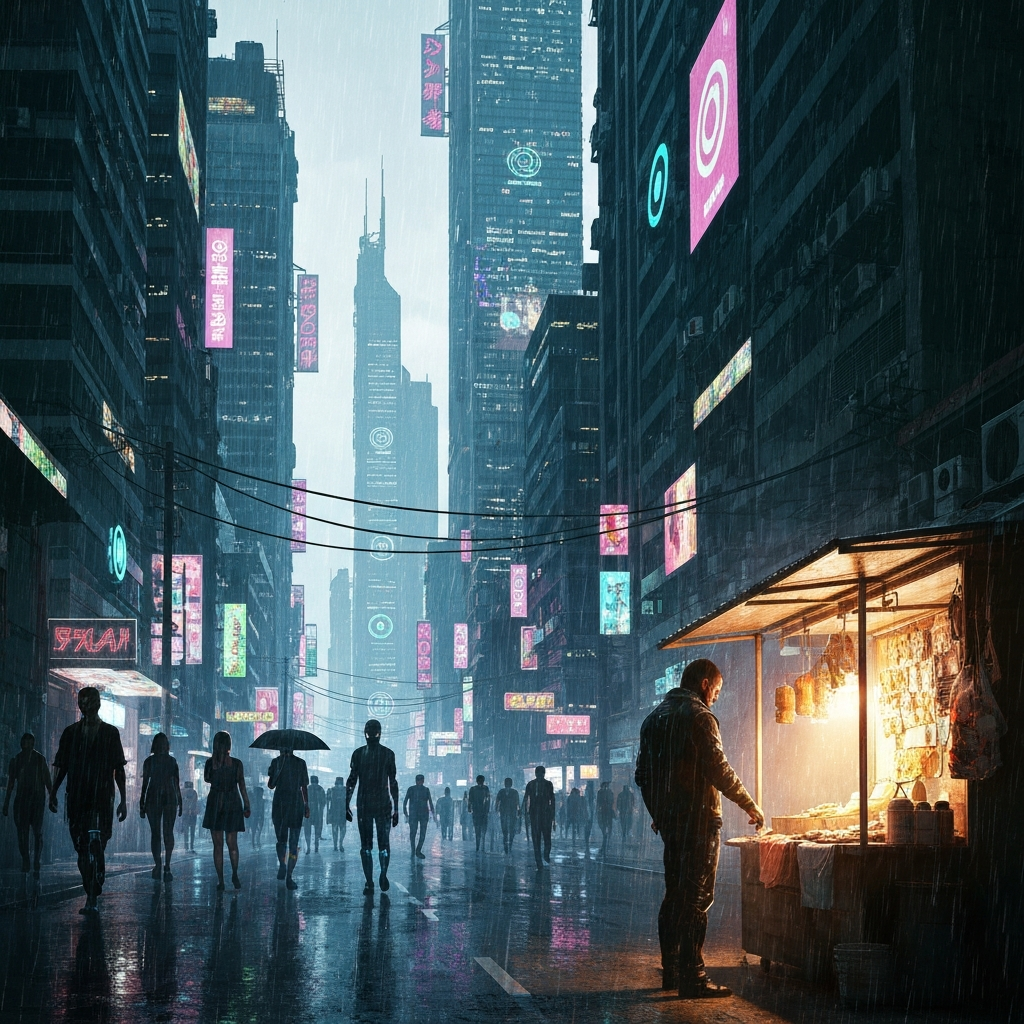

Did you know that the term “cyberpunk” was first used in a short story published in 1980? It’s a genre that has captured imaginations for decades, painting a picture of a future that is both dazzling and terrifying. Cyberpunk, at its core, is a subgenre of science fiction that explores the intersection of advanced technology and societal breakdown. Think of a world where towering, neon-lit skyscrapers cast long shadows over grimy, overcrowded streets, and where powerful corporations hold immense sway over everyday life.
High Tech, Low Life: The Core of Cyberpunk
The defining characteristic of cyberpunk is the “high tech, low life” philosophy. This means that while technology is incredibly advanced – with cybernetic enhancements, artificial intelligence, and virtual reality being commonplace – the quality of life for the majority of people has significantly degraded. Society is often stratified, with a wealthy elite living in luxury while the masses struggle in poverty, pollution, and crime.
Key elements often found in cyberpunk narratives include:
- Cybernetics and Augmentations: Humans often enhance their bodies with mechanical or electronic parts to improve strength, senses, or even to survive. This blurs the line between human and machine.
- Artificial Intelligence (AI): Advanced AI systems can range from helpful assistants to sinister overlords, often posing ethical dilemmas about consciousness and control.
- Megacorporations: Huge, powerful companies frequently replace or overshadow governments, dictating laws and controlling vast resources. Their influence is pervasive.
- Information as Power: Data, hacking, and the control of information networks are central themes. Hackers, often called “console cowboys” or “netrunners,” are key protagonists.
- Urban Decay and Dystopia: The setting is almost always a densely populated, futuristic city, often depicted as bleak, polluted, and crime-ridden.
- Noir Influences: Many cyberpunk stories feature elements of film noir, with cynical protagonists, femme fatales, and morally ambiguous situations.
Cyberpunk in Popular Culture
Cyberpunk has left an indelible mark on popular culture, influencing everything from movies and literature to video games. One of the most celebrated examples is the game Cyberpunk 2077, which immerses players in the sprawling, dangerous world of Night City. Other iconic works include the film Blade Runner, the novel Neuromancer by William Gibson, and the anime Ghost in the Shell. These works explore the human condition in the face of overwhelming technological advancement and societal challenges.
The genre doesn’t just present a bleak future; it often serves as a cautionary tale. It prompts us to consider the potential consequences of unchecked technological progress and corporate power, and what it truly means to be human in an increasingly digitized world. Understanding cyberpunk offers a unique lens through which to view our own rapidly evolving technological landscape and its potential impact on society. For more on the evolution of game worlds, you can explore Cyberpunk 2077 update.
Frequently Asked Questions About Cyberpunk
What are the main themes in cyberpunk?
The primary themes revolve around transhumanism (the idea of enhancing human capabilities through technology), the loss of individuality in a technologically saturated world, the struggle against oppressive systems like megacorporations or authoritarian governments, and the blurring of lines between reality and virtuality.
Is cyberpunk always dark and violent?
While cyberpunk often features gritty urban environments and conflict, not all stories are solely dark or violent. Many explore philosophical questions and the resilience of the human spirit amidst adversity. The *mood* is often noir-inspired, but the focus can vary.
How does cyberpunk relate to our current world?
Cyberpunk serves as a reflection of our current anxieties about rapid technological advancement, the increasing power of tech companies, data privacy concerns, and the growing gap between the wealthy and the poor. It prompts us to think critically about the direction our society is heading.